
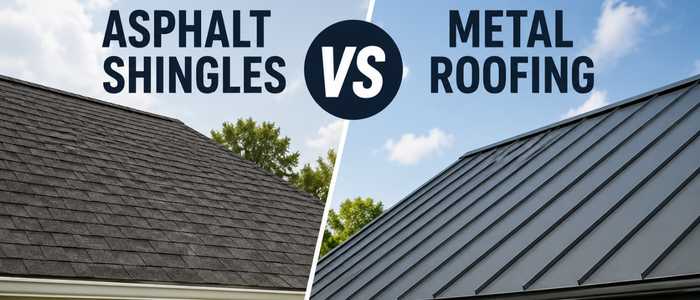
When deciding on a roofing material, homeowners often choose between asphalt shingles and metal roofing. Both options have unique benefits and drawbacks, affecting cost, durability, maintenance, and aesthetic appeal.
Asphalt shingles are the most common choice due to affordability and ease of installation, offering a variety of colors and styles suitable for most neighborhoods.
Metal roofing, while pricier upfront, excels in longevity, energy efficiency, and resistance to extreme weather conditions. Understanding the differences in lifespan, maintenance requirements, climate suitability, and overall cost can help you make a more informed decision.
This guide explores the pros and cons of each roofing type, helping you determine which material aligns with your budget, lifestyle, and long-term property goals.
Key Considerations When Choosing Your Roofing Material
Selecting the right roofing material involves more than just price or aesthetics. Factors like climate, roof slope, structural support, and long-term maintenance requirements all play critical roles in determining which option is ideal.
Homeowners in regions with high winds, heavy snow, or frequent storms may benefit from more durable materials, while those prioritizing quick installation and upfront savings might lean toward asphalt shingles. Additionally, the roof’s expected lifespan, energy efficiency, and impact on resale value should influence the decision.
Maintenance expectations also differ significantly: some roofs require regular inspections, debris removal, or repairs, while others offer minimal upkeep over decades. Understanding how each material responds to environmental stressors, potential damage, and energy performance is key.
Evaluating these practical considerations alongside visual appeal and neighborhood compatibility ensures that your roofing choice not only enhances the home’s appearance but also provides reliable protection and long-term value.
Comparing Lifespan and Durability
Roof lifespan and durability are key when choosing materials. Asphalt shingles typically last 10-25 years and need regular maintenance, while metal roofing can endure 40-70+ years, resisting fire, rot, pests, and extreme weather with minimal upkeep.
Asphalt Shingles Longevity
Standard asphalt shingles generally last 10-20 years, with premium architectural grades reaching 25-35 years. Their lifespan depends on installation quality, roof slope, climate, and maintenance.
Homeowners must regularly inspect shingles, remove debris, and address minor damage to prevent curling, granule loss, and accelerated wear over time.
Metal Roofing Longevity
Metal roofing provides exceptional longevity, typically lasting 40-60 years, with premium options exceeding 70 years. Its durability comes from resistance to fire, rot, pests, and impact damage.
Minimal maintenance is required, making it a long-term investment that can offset higher upfront costs while maintaining structural integrity and energy efficiency.
Cost Comparison: Upfront vs Long-Term Value
- Asphalt Shingles: Cost $1.50–$6 per square foot installed. Labor accounts for roughly 60% of total cost. Removal of old shingles or decking repairs adds $1–$5 per square foot. Permits range $50–$300. Budget-friendly and ideal for short-term ownership.
- Metal Roofing: Cost $5–$14 per square foot installed, depending on panel type and material. Standing seam panels are more expensive than corrugated options. Permits may add $250–$500. High upfront cost is offset by longevity, durability, and energy savings.
While asphalt shingles are ideal for lower budgets or temporary ownership, metal roofing provides long-term value through durability, fewer replacements, and energy efficiency, making it an investment for homeowners focused on property longevity.
Maintenance Requirements
Proper roof upkeep ensures durability. Asphalt shingles require frequent inspection and repairs, especially in warm or wet climates. Issues include granule loss, curling, buckling, and algae or bacteria growth. Regular sealing, debris removal, and monitoring of shingles and flashing prevent early deterioration.
Metal roofing, on the other hand, requires minimal maintenance. Occasional cleaning, inspections after storms, and re-coating paint every few years keep the roof performing optimally.
Resistance to pests, rot, and mildew reduces long-term maintenance costs, making metal roofing a hassle-free choice for those seeking a durable and low-maintenance solution.
Design and Aesthetic Options
Homeowners often choose roofing based on style, curb appeal, and neighborhood compatibility. Asphalt shingles provide practical color and texture choices suitable for traditional homes, while metal roofing offers a broader range of finishes, textures, and panel profiles for a more versatile and visually striking appearance.
Asphalt Shingle Styles
Asphalt shingles come in 3-tab, architectural, and luxury grades, offering multiple colors, textures, and patterns. These options suit traditional residential homes and help maintain consistency within neighborhoods.
While attractive, their design versatility is limited compared to the broader customization possibilities offered by metal roofing panels.
Metal Roofing Styles
Metal roofing includes corrugated, standing seam, and textured panels that can mimic slate, tile, or wood shakes. This versatility supports modern, contemporary, and classic aesthetics, allowing homeowners to achieve highly customized, visually appealing roofs that enhance property value and create a strong design statement.
Weather Resistance and Safety
Both roofing types offer varying levels of protection against natural elements. Asphalt shingles are more vulnerable to wind, hail, and severe storms, and require regular upkeep to maintain effectiveness. Bacterial growth, algae, and rot may weaken shingles over time, increasing repair costs.
Metal roofing withstands extreme weather conditions, including high winds, hail, and snow loads. Non-combustible and fire-resistant, metal panels also resist rot, mold, and insect damage.
Coastal climates may pose corrosion risks for some metals, but protective coatings can mitigate this issue. Overall, metal roofs provide superior safety and resilience compared to asphalt shingles.
Environmental and Energy Considerations
Sustainability and energy efficiency play a role in roofing choices. Asphalt shingles are less recyclable and generate significant landfill waste. Their heat absorption can increase cooling costs in warm climates.
Metal roofs are made from recyclable materials, can be recycled again at the end of their life, and reflect solar radiation to reduce energy consumption.
Homeowners may save 7–15% on energy bills, with some cases showing up to 25% annual cooling cost reduction. Metal roofs also support easy solar panel integration, enhancing long-term sustainability and energy efficiency.
| Feature | Asphalt Shingles | Metal Roofing |
| Lifespan | 10–25 years | 40–60+ years |
| Upfront Cost | $1.50–$6 per sq. ft. | $5–$14 per sq. ft. |
| Maintenance | Frequent | Minimal |
| Weather Resistance | Moderate | High |
| Energy Efficiency | Low | High |
| Design Options | Limited | Extensive |
| Recyclability | Low | High |
| Fire & Pest Resistance | Moderate | High |
FAQs
Are metal roofs noisier than asphalt shingles?
Metal roofs can produce more sound during heavy rain or hail compared to asphalt shingles. However, using proper insulation, underlayment, and installation techniques significantly reduces noise, making the difference barely noticeable for most homeowners in everyday conditions.
Can I install a metal roof myself?
DIY installation of a metal roof is possible for small, simple projects. It requires specialized tools, precise measurements, and strict adherence to safety protocols. For larger or complex roofs, professional installation is strongly recommended to ensure proper fit, durability, and warranty coverage.
Which roof type is better for resale value?
Metal roofing often enhances resale value due to its long lifespan, durability, fire resistance, and aesthetic appeal. Buyers tend to value low-maintenance, energy-efficient roofs that will last decades, making metal a more attractive investment than asphalt shingles for long-term property appreciation.
Do asphalt shingles require more repairs?
Yes, asphalt shingles generally need more frequent repairs. They are susceptible to granule loss, curling, cracking, and storm damage. Over time, exposure to wind, sun, and moisture increases the likelihood of replacements or patching to maintain the roof’s integrity and appearance.
Final Thoughts
Choosing between asphalt shingles and metal roofing requires balancing budget, durability, maintenance, and aesthetics. Asphalt shingles are cost-effective, widely available, and easy to install, making them ideal for homeowners seeking short-term solutions or DIY installation.
Metal roofing, while more expensive upfront, offers exceptional longevity, minimal maintenance, energy savings, and superior weather resistance.
Homeowners focused on long-term value, design flexibility, and reduced replacement costs will find metal roofing a worthwhile investment.
Evaluating your property goals, climate conditions, and long-term ownership plans will guide the decision, ensuring your roof protects your home effectively while complementing its style for decades.